Close your eyes and picture your kitchen. Where is the kettle relative to the sink? If you turned around, what would be behind you? Could you walk to the fridge with your eyes shut without bumping into anything?
That mental act — holding a three-dimensional space in your mind, rotating it, navigating through it — is called spatial reasoning, and it is one of the most quietly important cognitive skills you have. It is also one most of us rarely practise deliberately. Three-dimensional puzzles are one of the few accessible ways to train it. Here is why that matters and how it works.
What spatial reasoning is
Spatial reasoning (or spatial cognition) is the ability to think about objects in three dimensions: to imagine them rotating, to judge how they fit together, to navigate a space, and to reason about positions and orientations. It is the skill an architect uses to read a floor plan, a surgeon uses to guide an instrument, a tennis player uses to judge where a ball will land, and a driver uses to reverse into a tight parking space.
Psychologists break it into several related abilities:
- Mental rotation — imagining an object turning and predicting what it will look like from a new angle.
- Spatial visualisation — building and manipulating a multi-step mental image (for example, folding a flat shape into a box).
- Spatial orientation — knowing where you are in a space and how to get where you are going.
These abilities are not fixed. Like a muscle, they improve with use and fade without it.
Why spatial reasoning matters
Research stretching back decades links strong spatial skills to success in science, technology, engineering, and mathematics (the STEM fields). A landmark long-term study by Vanderbilt University tracking gifted students over decades found that spatial reasoning measured in adolescence predicted achievement in STEM careers more reliably than maths or verbal scores alone.
But the value goes well beyond careers. Spatial reasoning helps you assemble furniture, pack a suitcase efficiently, read a map, parallel park, catch a thrown object, and find your way out of an unfamiliar building. It is woven through daily life so thoroughly that you only notice it when it fails — when you cannot quite tell if that bookshelf will fit through the doorway, or when you take a wrong turn in a new city.
How 3D puzzles train it
A flat puzzle — Sudoku on paper, a crossword — exercises logic and language but does almost nothing for spatial reasoning, because nothing in it needs to be mentally rotated or navigated. Three-dimensional puzzles change the equation entirely.
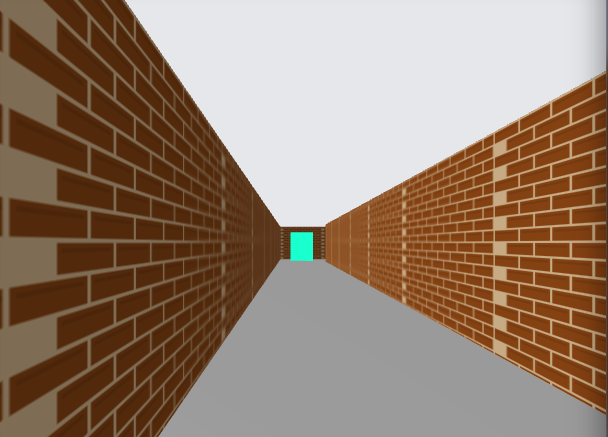
- 3D Maze drops you into a first-person corridor where you see only what is ahead. To find the exit you must build a mental map of the whole layout as you explore, remembering which branches you have already tried and how they connect. That is pure spatial orientation.
- 3D Word Search hides words on the faces of a rotating cube. You must mentally track which faces you have already searched and imagine how a word might wrap from one face onto another. That is mental rotation plus spatial visualisation.
- 3D Sudoku spreads several grids across the faces of a cube. You rotate the cube to reach each face and must remember how the faces relate to one another, especially where they share edges. That is holding a three-dimensional structure in working memory.
- 3D Jigsaw scatters pieces in space. To place one you must orient it on three axes and judge its position relative to the frame from your current viewing angle. That is mental rotation in its purest form.
Each of these forces your brain to do something a flat puzzle never asks for: to represent and manipulate a three-dimensional object that you can only ever partially see at once.
What the evidence shows
Studies on spatial training are encouraging. A meta-analysis published in 2020 reviewed more than 200 studies of spatial-skills training and found that practice produces reliable, lasting improvements — and that the gains transfer to new spatial tasks, not just the one practised. Crucially, the training does not need to be exotic: playing certain video games, doing mental-rotation exercises, and solving spatial puzzles all produce measurable gains.
The same research found that women, on average, start with weaker mental-rotation skills than men (a difference that appears driven largely by differential practice rather than biology), and that targeted spatial training closes that gap substantially. In other words, spatial reasoning is highly trainable, and those who start behind can catch up quickly.
How to get the most out of 3D puzzles
- Rotate deliberately. Do not just spin the cube or scene randomly. Before you rotate, try to predict what you will see on the hidden face. Checking your prediction against reality is what builds the mental model.
- Navigate from memory. In a 3D maze, try to plan a route using only the mini-map or your memory of explored branches, rather than stumbling forward. Forcing yourself to hold the layout in mind is the exercise.
- Mix it up. Different 3D puzzles train different spatial sub-skills. Rotating between a maze, a cube word search, and a 3D jigsaw gives you broader coverage than grinding one type.
- Increase difficulty gradually. As a 3D puzzle becomes familiar, the spatial load drops. Pushing to a larger cube or a more complex maze keeps the challenge — and the training effect — high.
The bottom line
Spatial reasoning is a practical, trainable skill that shapes how you move through and interact with the physical world. Most adults never deliberately practise it, which means even a little regular exposure to three-dimensional puzzles can produce noticeable gains. And unlike abstract brain-training drills, 3D puzzles are genuinely fun: you get to spin, explore, and solve in a space that feels tangible.
If you have only ever played flat puzzles, the 3D versions are worth the leap. Start with the 3D puzzles collection — each one exercises your spatial mind in a slightly different way, and a few minutes a day is enough to feel the difference.